


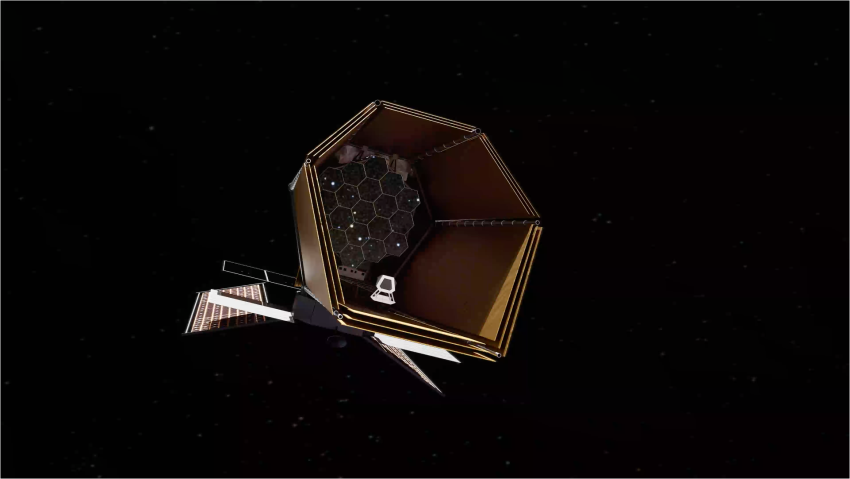

UK astronomers are a step closer to playing a leading role in NASA's search for alien life in the coming decades, after receiving £3million to continue developing one of the core instruments of the Habitable Worlds Observatory (HWO).
The "exciting" mission – the US space agency's next flagship space telescope after the Nancy Grace Roman Space Telescope – is expected to launch in the 2040s.
The UK-led plans follow a series of instrument studies funded by the UK Space Agency (UKSA), which have been shared with NASA and are helping to shape the mission as it moves into its next phase of development.
"The Habitable Worlds Observatory is one of the most exciting space science missions now under development," said Professor Martin Barstow, of the University of Leicester, who is playing a leading role in the UK's involvement and gave an update on the mission at the Royal Astronomical Society's National Astronomy Meeting in Birmingham.
"It will tackle one of the biggest questions in science: are we alone in the universe? By searching for Earth-like planets and studying their atmospheres, the HWO will look for evidence of life beyond our Solar System."
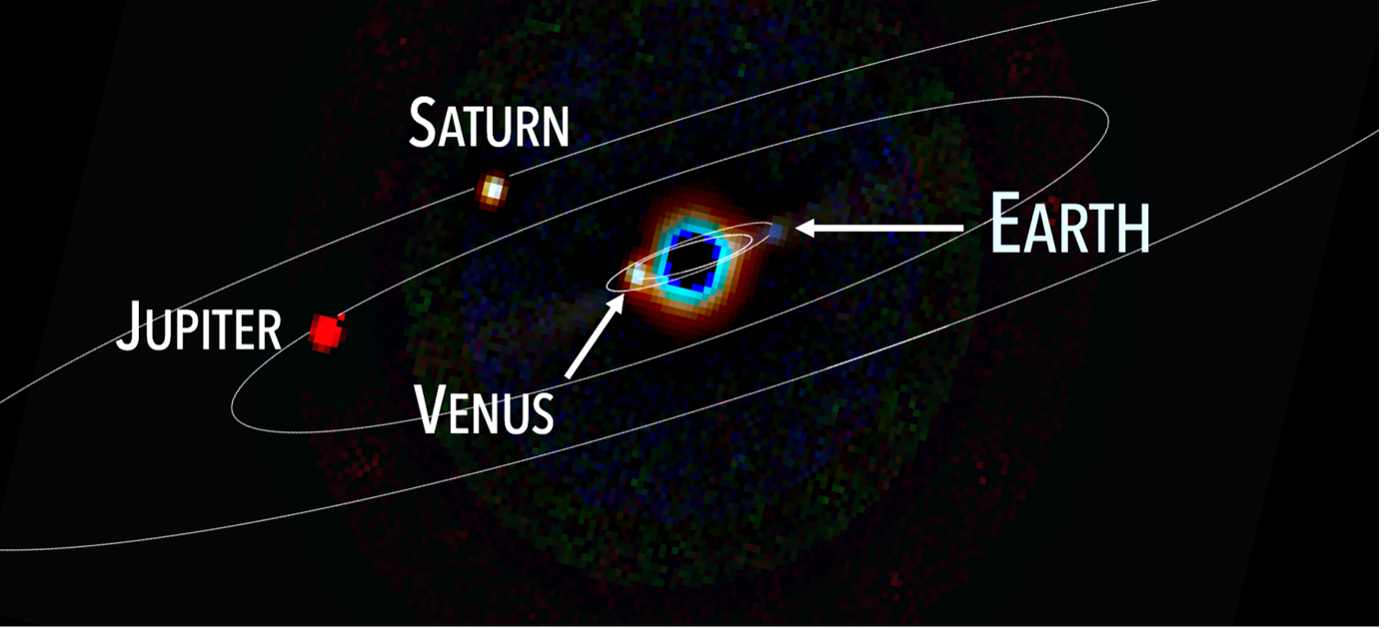
Seen from a distance, a planet like Earth would be a faint dot right next to a blinding sun, 10 billion times brighter. To image this moth next to a flamethrower, HWO's 8 metre mirror must be held stable to within the width of an atom, and the light from the sun blocked out.
Professor Barstow added: "The UK has a long history of making major contributions to NASA's flagship observatories, from Hubble to the James Webb Space Telescope, and we are now in a strong position to lead the development of one of HWO's core scientific instruments."
Vincent Van Eylen, Associate Professor in Exoplanets at UCL's Mullard Space Science Laboratory, called HWO "one of the most exciting missions of my lifetime".
He added: "It will be the first telescope designed to search for evidence of life on distant planets. Imagine for a moment it finds evidence of life out there. What an achievement that would be!
"It's fantastic that the UK Space Agency is ensuring that UK scientists and engineers will have a leading role in this exciting project."
The UK is leading on the development of HWO's High Resolution Imager (HRI) and Multi-Object Spectrograph (MOS), which are expected to be core instruments on the telescope.
Researchers have just been awarded a new £3million funding boost from the UKSA to ramp up their efforts and develop the necessary technologies to make the instrument a reality. This latest development builds on the previous studies, but significantly expands the scale.
Dr Caroline Harper, Head of Space Science at the UK Space Agency, said: "This UK Space Agency funding is a significant step forward in securing the UK's place at the heart of one of the most ambitious space science missions ever conceived.
"Habitable Worlds Observatory is being designed to answer whether we are alone in the universe and will require technological advances as well as scientific breakthroughs. That's why we're backing UK scientists and engineers to lead one of its core instruments."
The UK team includes scientists from Durham University, The Open University, the University of Leicester, RAL Space, the University of Portsmouth, the University of Oxford, the UK's Astronomy Technology Centre (ATC) and UCL's Mullard Space Science Laboratory.
However, with the mission not expected to launch for another two decades, it is the existing generation of younger researchers – currently facing huge uncertainty against the backdrop of widespread funding cuts – who will be the UK's science leaders when it's ready.
"The UK Space Agency is supporting instrument development for HWO but that would be a waste if there is not a community of scientists ready to exploit it in the 2040s," Professor Barstow cautioned.
"The decisions we make over the next few years will determine whether UK scientists are at the forefront of those discoveries for decades to come."
He said sustained investment would be needed to maintain the scientific expertise and technical capability required to deliver the UK's planned contribution.
"The proposed cuts affecting key institutes and research groups involved in the mission could weaken Britain's ability to lead one of the world-leading observatory's core instruments and fully exploit the science when HWO begins operations in two decades' time," Professor Barstow added.
The HWO's headline scientific goal is to search for Earth-like planets around nearby stars and examine their atmospheres for signs of life.
But rather than surveying the entire galaxy, it will focus on nearby stars within our cosmic neighbourhood. At distances of around 30 light-years, astronomers expect the observatory to be capable of directly studying Earth-like planets and searching their atmospheres for possible signs of life.
Like the Hubble Space Telescope and James Webb Space Telescope (JWST) before it, though, HWO will also serve as a general-purpose observatory, allowing astronomers to study everything from planets and stars to galaxies and the evolution of the universe.
NASA is leading the mission, but international partners will provide major elements of the observatory. The UK aims to design and build one of the cameras that will sit at the telescope's focal plane and collect the light needed to carry out its observations, while also contributing to other systems.
Over the past three years, the UK astronomy community has held a series of national workshops, supported by the Science and Technology Facilities Council (STFC), to develop scientific priorities and bring together universities, research laboratories and industry.
UK researchers previously played important roles with the Hubble mission and led the European consortium that developed the Mid-Infrared Instrument (MIRI) on JWST.
The next phase of UK instrument studies is expected to begin next month as NASA continues developing HWO in collaboration with researchers across the world.
HWO will be the first in NASA's next generation of flagship "Great Observatories", building on the legacy of Hubble and Webb while seeking to answer one of humanity's oldest questions: whether life exists elsewhere in the universe.
ENDS
Media contacts
Sam Tonkin
Royal Astronomical Society
Mob: +44 (0)7802 877 700
Dr Robert Massey
Royal Astronomical Society
Mob: +44 (0)7802 877 699
Megan Eaves
Royal Astronomical Society
Science contacts
Professor Martin Barstow
martin.barstow@leicester.ac.uk
Professor Richard Massey
Dr Vincent Van Eylen
Images & video
Figure 1: A conceptual design of the Habitable Worlds Observatory.
https://drive.google.com/file/d/1x88PSxYcoZ9rJocvLud42UHIYHWddZI2/view?usp=sharing
Credit: NASA
Figure 2: A conceptual design of the Habitable Worlds Observatory.
https://drive.google.com/file/d/1J7yNZuYxHoUOUuY-frSLKuC6z1XHOGpH/view?usp=drive_link
Credit: NASA
Figure 3: A conceptual design of the Habitable Worlds Observatory, showing an 8m segmented primary mirror and off-centre secondary.
https://drive.google.com/file/d/1VUTOuKPhUvkjW34RWAWAznRtoUZcDfaZ/view?usp=drive_link
Credit: NASA
Figure 4: How the HWO might see the Solar System if it were at a distance of 30 light-years.
https://drive.google.com/file/d/1_arNMrOLWQzz84Zx5eYOBBGbKIdbxmXP/view?usp=drive_link
Credit: NASA
Video 1: A video simulation of how the Solar System would appear to HWO at 30 light-years' distance.
https://drive.google.com/file/d/1yqZTCSfKBSiY6e-SOoW8vrLksEwa0HVy/view?usp=drive_link
Credit: NASA
Further information
- NASA's 'flagship' missions are its largest and most ambitious space astronomy missions. Previous flagship observatories include the Hubble Space Telescope, Chandra X-ray Observatory, Spitzer Space Telescope, James Webb Space Telescope and the upcoming Nancy Grace Roman Space Telescope.
- The Habitable Worlds Observatory is being developed through NASA's Great Observatories Maturation Program (GOMaP), following recommendations from the 2020 US Astronomy and Astrophysics Decadal Survey.
- Funding: Development of the UK HWO programme has been supported through two separate funding streams. The Science and Technology Facilities Council has funded the UK HWO community through a programme of national workshops and related activities over the past three years. The UK Space Agency has funded the instrument concept studies that are helping to shape the UK's proposed contribution to the mission.
- NASA is expected to issue further calls for instrument studies and technology development as HWO progresses through its design phase.
- Professor Martin Barstow chairs the UK Habitable Worlds Observatory community and is coordinating UK plans for participation in the mission with the UK Space Agency and the wider UK astronomy community.
- Dr Vincent Van Eylen leads an exoplanet research team at UCL's Mullard Space Science Laboratory. He leads the UKSA-funded High Resolution Imager (HRI) team of scientists and engineers across 7 UK institutes.
- What makes HWO different from Webb? James Webb Space Telescope was designed primarily to study the early universe, galaxies, stars and planetary systems using infrared light. Habitable Worlds Observatory will also be a general-purpose observatory, but its headline science goal is the direct detection and characterisation of Earth-like planets around nearby stars in the search for evidence of life.
The session 'Habitable Worlds Observatory' took place at NAM2026 from 14:15-15:45 BST on Friday 24 July 2026 in room M208 and M209. Find out more at: https://uobevents-national-astronomy-meeting-2026.eventsairsite.com/block-schedule. If you would like a Zoom link to watch it back, please email press@ras.ac.uk
Notes for editors
About the Royal Astronomical Society
The Royal Astronomical Society (RAS), founded in 1820, encourages and promotes the study of astronomy, solar-system science, geophysics and closely related branches of science.
The RAS organises scientific meetings, publishes international research journals, recognises outstanding achievements by the award of medals and prizes, maintains an extensive library, supports education through grants and outreach activities and represents UK astronomy nationally and internationally. Its more than 4,000 members (Fellows), a third based overseas, include scientific researchers in universities, observatories and laboratories as well as historians of astronomy and others.
The RAS accepts papers for its journals based on the principle of successful peer review, following which experts on the Editorial Boards accept the papers for publication. The Society issues press releases based on a similar principle, but the organisations and scientists concerned have overall responsibility for their content.
Keep up with the RAS on Instagram, Bluesky, LinkedIn, Facebook and YouTube.
Download the RAS Supermassive podcast
About the Science and Technology Facilities Council
The Science and Technology Facilities Council (STFC), part of UK Research and Innovation (UKRI), is the UK’s largest public funder of research into astronomy and astrophysics, particle and nuclear physics, and space science. We operate five national laboratories across the UK which, supported by a network of additional research facilities, increase our understanding of the world around us and develop innovative technologies in response to pressing scientific and societal issues. We also facilitate UK involvement in a number of international research activities including the ELT, CERN, the James Webb Space Telescope and the Square Kilometre Array Observatory.
About The University of Birmingham
The University of Birmingham is ranked amongst the world's top 100 institutions. Its work brings people from across the world to Birmingham, including researchers, educators and more than 40,000 students from over 150 countries.
England’s first civic university, the University of Birmingham, is proud to be rooted in one of the most dynamic and diverse cities in the country. A member of the Russell Group and a founding member of the Universitas 21 global network of research universities, the University of Birmingham has been changing the way the world works for more than a century.
The University of Birmingham is committed to achieving operational net zero carbon. It is seeking to change society and the environment positively, and use its research and education to make a major global contribution to the UN Sustainable Development Goals. Find out more about our approach to sustainability.